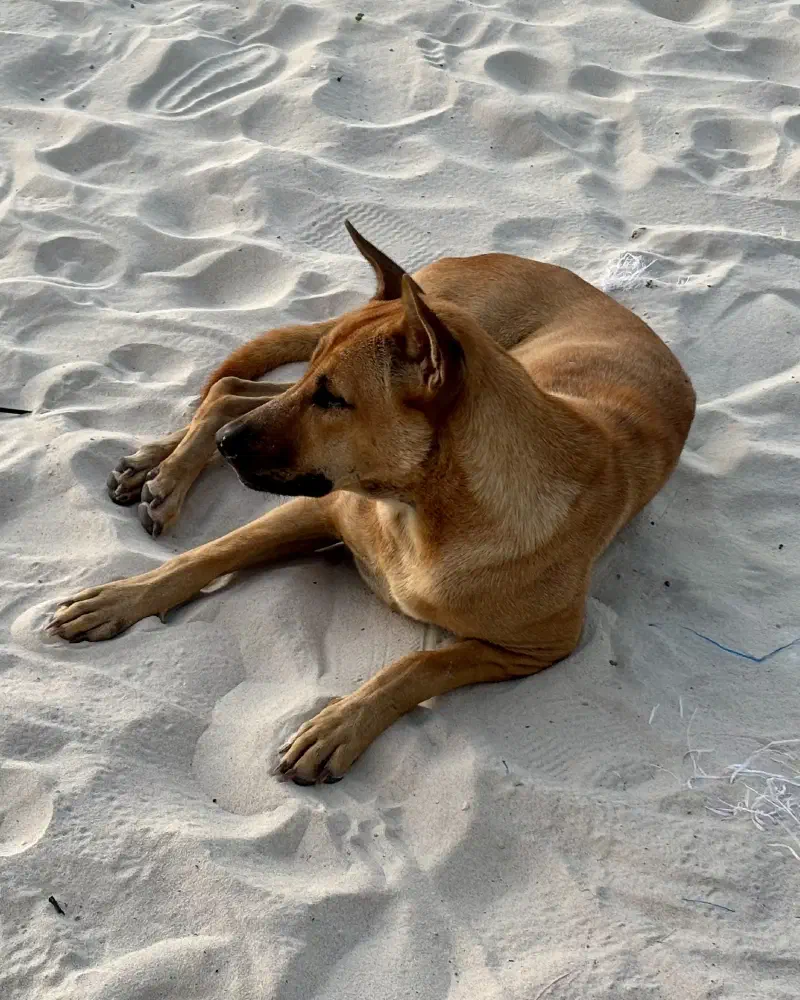
Every island has its own frequency of companionship, but the reality for the animals on the perimeter is often a «Wild West» where survival is the only ritual that matters.
The Ubud Chapter
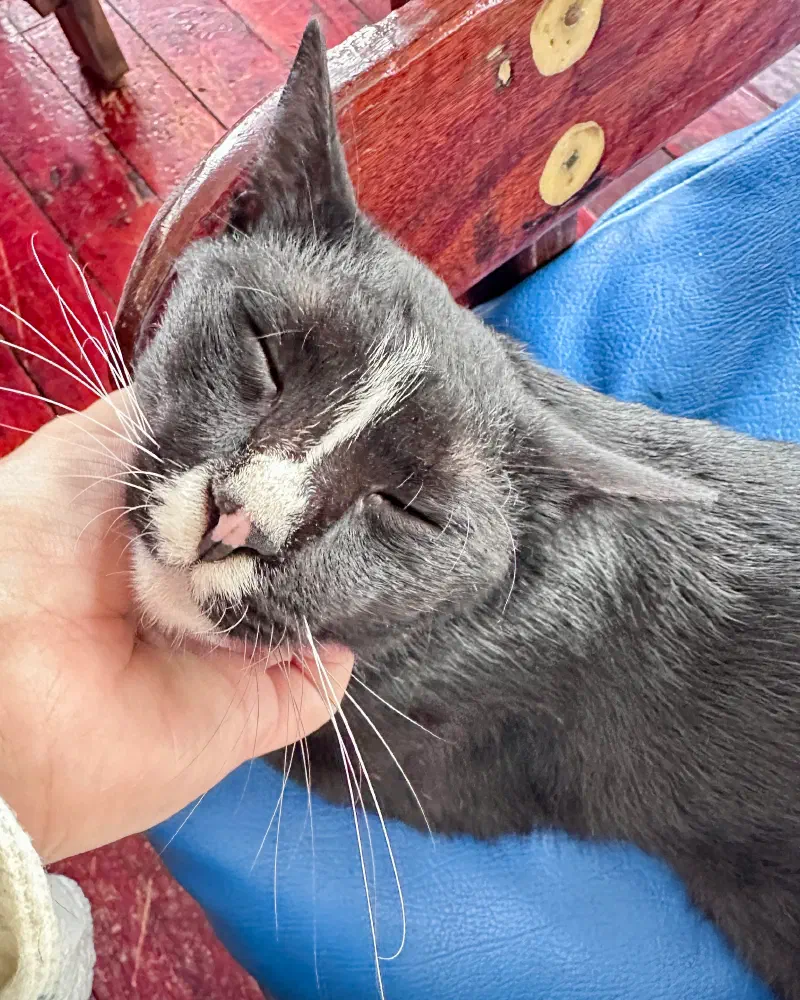
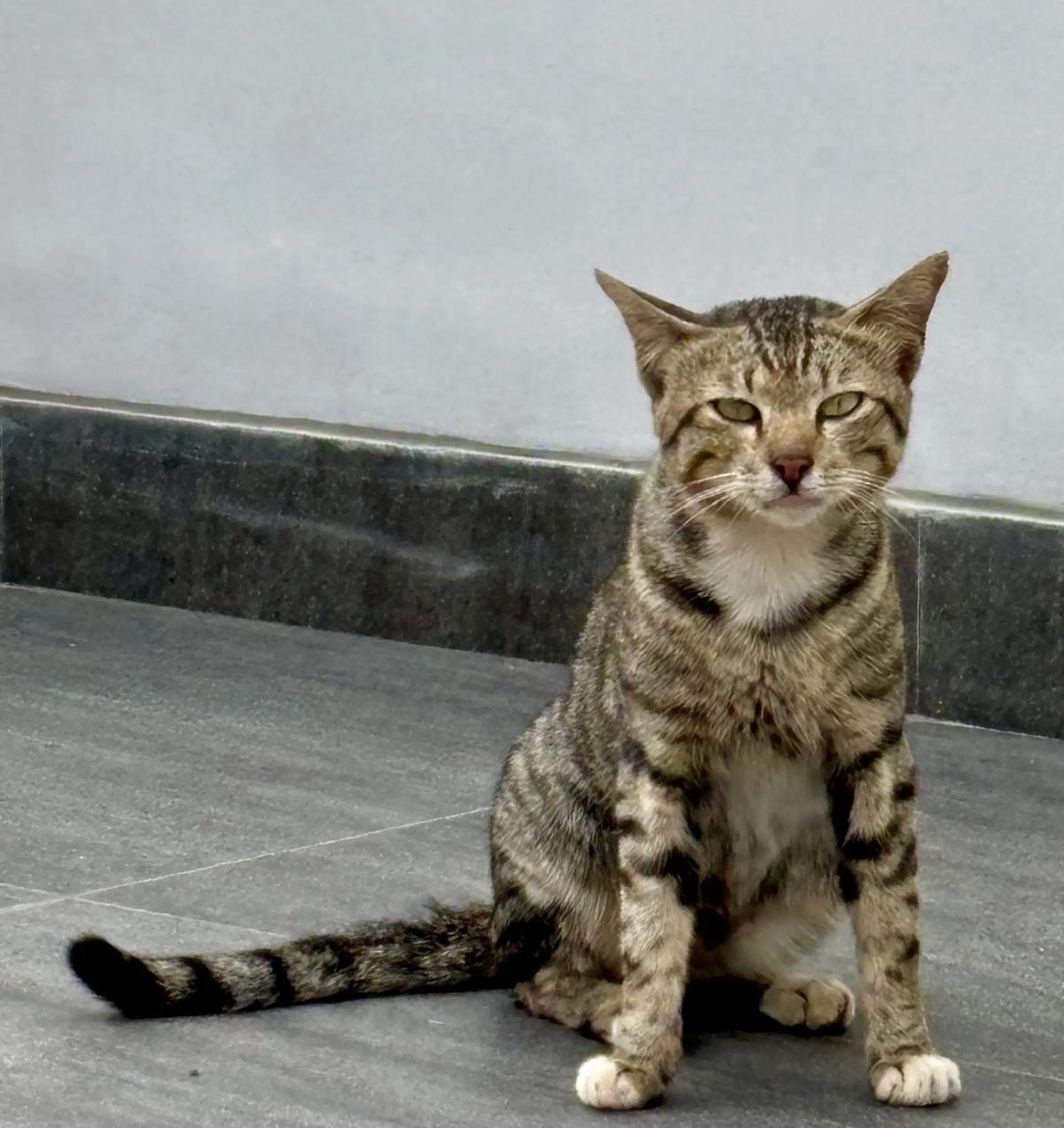
A few years ago, a grey kitten appeared on my terrace in Ubud. He was skinny, unkempt, and clearly starving. I offered him a plate of food, the same portion size I eat, and he finished it in minutes. That was the start of a five-month friendship. He was a rebel, shy and fiercely independent, with the character of someone who refuses to follow the mainstream.
He was an acrobat by necessity. He rarely touched the ground because the perimeter dogs were always waiting. Instead, he claimed the high lines and my terrace. He never felt comfortable coming inside, so he slept every night on my shoes. The only safe spot he would accept. I fed him every day, knowing the harsh reality of the street dogs and the wild perimeter, but respecting the stillness he found in that small space. One day, he didn’t return. In the harsh truth of nature, the struggle often ends in the shadows. To travel is to face this reality: that nature includes suffering, illness, and a relentless survival mood as soon as the sun goes down.
The Regional Frequency
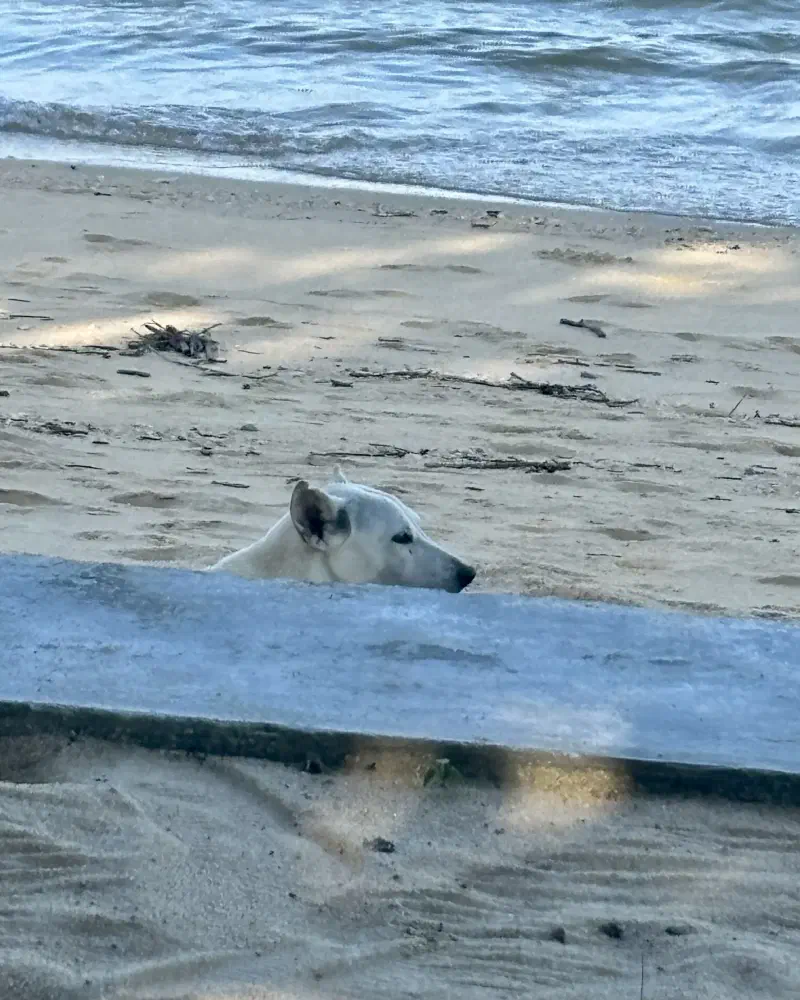
On Koh Phayam, the islanders domesticate the animals first, creating a relaxed frequency where even the snakes and dogs maintain a strange peace. But on other islands, the neglect is structural. This leads to the rapid spread of diseases like rabies.
Having lived in Gianyar, I’ve experienced the «Rabies Hunt» while driving remote roads at night. It is a specific kind of madness; a normal dog eventually relents, but a rabies-infected animal is driven by a relentless, escalating aggression. A note to those navigating these paths: never kick an animal in these moments. It is cruel, and it only trains the animal to be more aggressive toward the next traveler.
Whether it’s the friendly packs on Koh Phayam or navigating territorial lines in remote hills at night, I’ve learned to carry treats for the friendly and respect for the wild. There’s a quiet strength in being the one who remembers to care, even when the journey is hectic.
The Ethics of Care
For those in Bali wanting to contribute, be wary of «Instagram-fancy» shelters run by foreigners. I’ve seen scammers use their charisma to fund luxury lifestyles while local animals continue to suffer. If you want to donate or adopt, go to BAWA (Bali Animal Welfare Association). They are legal and serious about vaccines and sterilization.
Sonic Layer
Visual Logs