[本文亦提供 中文 版本。]
When we travel, we are constantly subjected to a familiar choreography of small talk. «Where are you from?» «Where do you live?» When I first started moving through the world long term, these questions irritated me. They felt like rigid templates designed to categorize a stranger based on cultural background or race, rather than seeing them for who they are in the exact, unburdened present moment. When I cross paths with people, I want to catch their raw energy and vibe without the dead weight of their history. Time changes and people are constantly influenced. The most vital lesson while navigating the road or life itself is to shed biases and stigmas, to remain present and to listen to your instincts and trust your gut feelings.
Over time, my perspective shifted. I realized that for a large part of society, small talk is a security blanket. A low-effort script used because people have a genuine need to find common ground and feel safe around someone new. Even so, the standard script remains fundamentally flawed. It is entirely obsessed with the past and the static present, yet it completely ignores the true trajectory of the soul. Only a few ever asked the most fascinating question of all:
Where are you going?
Two travelers meet in a brief, fleeting moment of transition. Why do we only ask about the origin, but never the destination? Our dreams, our plans, our current North Star? Where you are headed tells me infinitely more about who you are than where you started.
To truly grasp belonging, we have to untangle the identity metrics we default to. Asking where someone lives is purely logistical. A fact-based question about coordinates and real estate. Asking where someone is from is much heavier and highly ambiguous, blurring the line between the dirt where ancestors are buried and the nation stamped on a passport. This brings us to the ultimate calibration:
Where is home?
Is it an anchor dropped in childhood, destined to hold you locked in place forever? Is it bound strictly to biology? To parents, siblings and family trees? Or does home possess a radical, beautiful plasticity? What is home if not the space where your consciousness feels deeply connected? Being born and living somewhere are technical events to me. Birth is a gamble of privilege and I harbor no false pride about it.
I believe home is elastic. A state of resonance that expands and contracts based on safety, comfort and human connection. Because of this, it can be entirely temporary. I remember a simple, one-room studio located near the equator, deep in the tropics. It wasn’t grand but it was exactly what my internal structure required. It had a kitchen, a solid workspace and a landlord I could trust. Over time, I built a community there, even sharing my terrace with a stray kitten for months. In that simple space a home was born. I often move to a new environment simply because I catch a good vibration, staying until I feel the familiar internal pull that tells me it is time for something new. Home is transitional. It does not need to outlive you to be real.
True freedom means your sanctuary is entirely portable, capable of surviving immense external chaos. Over the years, I have navigated five earthquakes and two volcanic eruptions across the equatorial grid. I remember the sudden sway of the stongest earthquake, waking up in the middle of the night while everything is shaking. Mirrors and windows breaking, running into the free just in underwear. Later i was forced to leave due to physical cracks in my studio walls.
And I remember Mount Merapi. The first time it activated right as I arrived, I was terrified as the sky turned dark and the ground felt burning hot. But by the second eruption, watching the ash clouds from the balcony of my later rented long term appartment, I felt entirely steady. I had learned to integrate the tension, realizing that something scary can become beautiful once you integrate it.
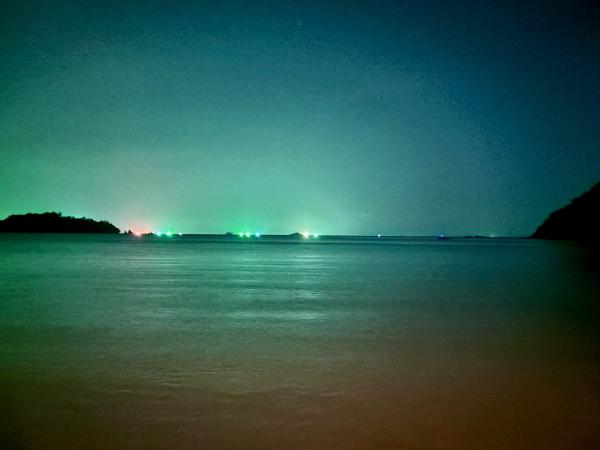
Home shows up in these deep contrasts. I feel home in the alpine heights. I feel home in the neon-heavy density of Megapolises, the calmness of the coasts, or the primitive rhythm of the islands. And I feel home in Europe, where the pillars of my closest friendships are rooted. Home is simply the place where your environment meets your needs, where you choose to stand and where your soul finds a moment of static peace before the next journey begins.